Getting Started with Ledger: A Complete Beginner’s Guide
Cryptocurrency has become a mainstream form of digital finance, offering opportunities for investment, savings, and global transactions. However, the decentralized nature of cryptocurrency also means users are fully responsible for the security of their assets. Unlike traditional bank accounts, there is no central authority to recover lost funds if your wallet is compromised. This is where Ledger comes in, providing a secure hardware wallet system designed to protect your digital assets. Ledger.com/start is the official starting point for users looking to begin their cryptocurrency journey safely.
This guide explores everything a beginner needs to know: selecting a Ledger device, initializing it, installing Ledger Live, managing accounts, understanding security, troubleshooting common issues, and following best practices.
What Is Ledger?
Ledger is a hardware wallet provider that allows users to store their cryptocurrency offline, minimizing exposure to hacking and online threats. Its two main products, Ledger Nano S and Ledger Nano X, support a wide variety of cryptocurrencies. Ledger’s hardware wallets work in tandem with Ledger Live, a companion application that manages accounts, tracks balances, and authorizes transactions.
Ledger.com/start is designed to guide users through the initial setup process, ensuring that your wallet is secure from the beginning. This includes choosing a device, connecting it safely, setting up a PIN, and understanding the importance of the recovery phrase.
Step 1: Choosing the Right Ledger Device
Ledger offers two main devices:
Ledger Nano S – Compact and affordable, suitable for beginners or those managing a small number of cryptocurrencies.
Ledger Nano X – Offers Bluetooth connectivity, a larger screen, and more storage for managing multiple assets, ideal for active traders or users with diverse portfolios.
Choosing the right device depends on your usage. Ledger.com/start provides guidance on how to select a device based on your needs, the cryptocurrencies you plan to hold, and whether you prefer mobile access.
Step 2: Unboxing and Authenticity Check
Once you receive your Ledger device, it is essential to verify that it has not been tampered with. Ledger packages are sealed and designed to be secure. Carefully inspect the box and the device. Only devices purchased from official sources should be used to avoid the risk of compromised hardware.
Step 3: Device Initialization
Initializing your Ledger device is the first step to secure cryptocurrency management:
Power on the Device – Follow the on-screen instructions to start the setup.
Set a PIN Code – Choose a secure PIN (4–8 digits) that you can remember but is difficult for others to guess. The PIN protects your device from unauthorized access.
Record the Recovery Phrase – The device will generate a 24-word recovery phrase. Write this phrase down on the provided card and store it in a safe offline location. This phrase is your ultimate backup in case the device is lost, damaged, or stolen. Never store it digitally or share it with anyone.
Step 4: Installing Ledger Live
Ledger Live is the software companion to your hardware wallet, enabling you to manage your cryptocurrencies:
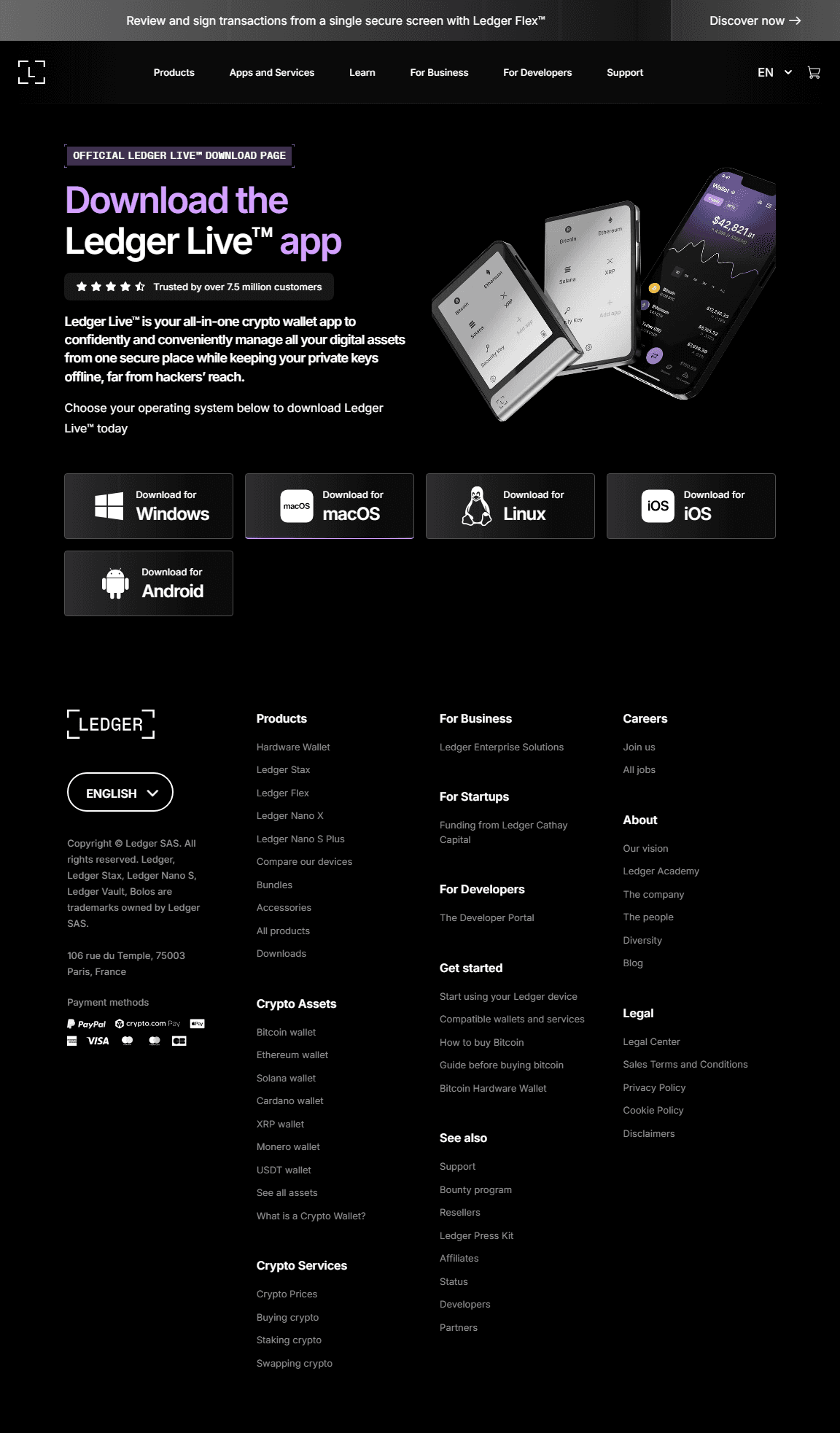
Download and Install – Install Ledger Live on your computer or mobile device. Ensure the device is secure and free of malware.
Connect Your Device – Use a USB cable or Bluetooth (Nano X) to link your Ledger wallet to Ledger Live.
Add Accounts – After connecting, you can add accounts for the cryptocurrencies you hold, such as Bitcoin, Ethereum, and others.
Sync with the Blockchain – Ledger Live pulls account information from the blockchain, allowing you to view balances and track transactions.
Ledger Live does not store private keys, which remain safely on the hardware device. It serves as a management interface to interact with your funds securely.
Step 5: Managing Accounts and Transactions
With your Ledger device and Ledger Live set up, you can manage your cryptocurrency:
Receive Funds – Ledger Live provides a unique address for receiving cryptocurrency. Always verify addresses on the device screen to ensure they are correct.
Send Funds – Transactions are authorized directly on the Ledger device, ensuring that malware on your computer cannot execute transfers.
Track Balances – Ledger Live updates balances and transaction history, giving you a comprehensive overview of your assets.
Manage Multiple Assets – You can add multiple cryptocurrency accounts and manage them all through one interface.
By following these steps, you gain complete control over your digital assets while maintaining maximum security.
Step 6: Security Features to Know
Ledger wallets are designed with multiple layers of security:
Offline Private Keys – Your private keys never leave the device, preventing online exposure.
PIN Protection – The device PIN prevents unauthorized access, even if the hardware is lost or stolen.
Recovery Phrase – The 24-word phrase ensures wallet restoration in case of device loss or failure.
Transaction Verification – All transactions require manual confirmation on the device, eliminating the risk of remote unauthorized transfers.
Ledger Live Security – The software verifies operations and firmware updates, maintaining overall account integrity.
Understanding these security features is critical to protecting your cryptocurrency investments.
Step 7: Troubleshooting Common Issues
Even with proper setup, users may face occasional challenges:
Device Not Recognized – Ensure cables, Bluetooth connections, and device firmware are functioning correctly. Updating Ledger Live can often resolve this.
Forgotten PIN – Too many incorrect entries may lock the device. The recovery phrase will be required to restore access.
Ledger Live Errors – Software glitches can prevent account access. Reinstalling or updating the application usually solves these problems.
Lost Recovery Phrase – Without it, funds cannot be recovered if the device is lost. Secure storage is essential.
Step 8: Mobile Access and Convenience
Ledger Live’s mobile app allows users to manage their assets on the go:
Bluetooth access for Ledger Nano X
Real-time notifications for transactions
Biometric login options for additional convenience
Portfolio monitoring and secure transaction approval
Mobile access maintains security while providing flexibility for active users.
Step 9: Best Practices for Ledger Use
For maximum security, follow these best practices:
Keep your Ledger device offline when not in use.
Store the recovery phrase securely offline and never share it.
Use strong, unpredictable PINs.
Update Ledger Live regularly to benefit from security improvements.
Verify every transaction on the device before approval.
Avoid public Wi-Fi networks when accessing Ledger Live.
Remain vigilant against phishing attempts and only follow official instructions from Ledger.com/start.
Adhering to these practices ensures your funds remain safe from unauthorized access and digital threats.
Conclusion
Ledger.com/start provides a clear, step-by-step path for new users to secure their cryptocurrency. By guiding users through device selection, initialization, Ledger Live setup, and account management, Ledger ensures that users begin their crypto journey safely. Hardware wallets like Ledger combine offline key storage with robust authentication, making them one of the safest ways to manage digital assets.
From selecting the right device and creating a secure PIN to managing multiple accounts and following security best practices, Ledger empowers users to maintain control over their funds. Starting with Ledger correctly is crucial, as proper setup and understanding of security features protect against potential risks and ensure a smooth experience in the digital currency world.